Dr. Gymbro
←

#rare sugar

1 article
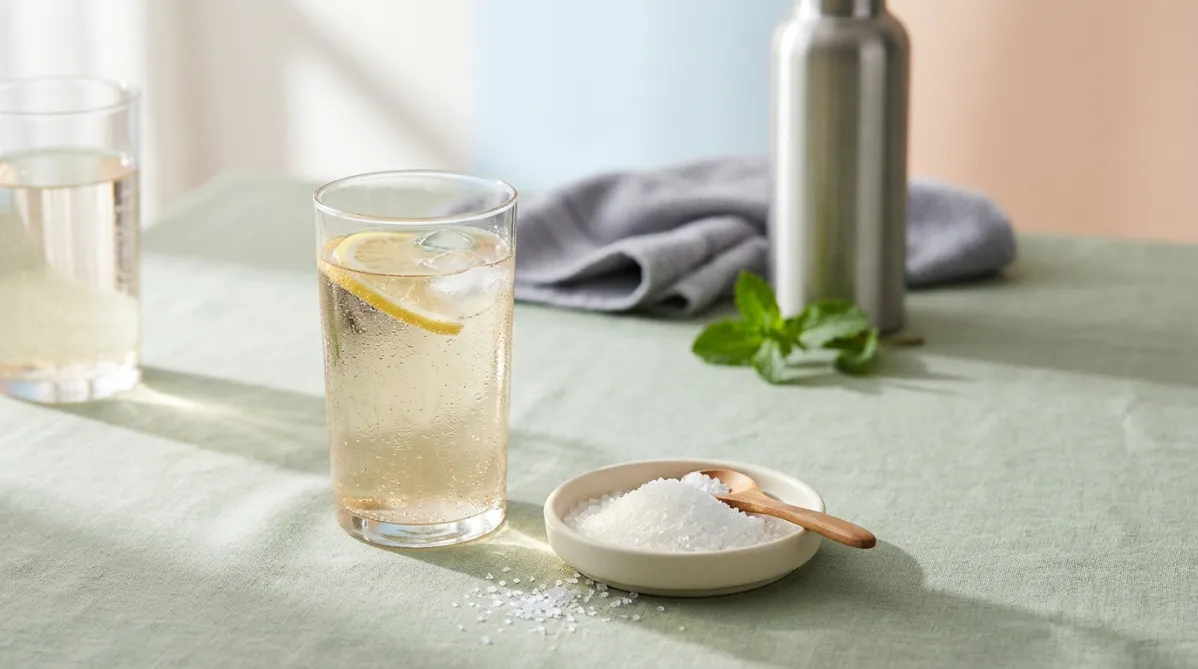
A wide, airy editorial still life photographed on a pale sage-green linen surface in soft morning window light. At the center sits a tall, clear glass of lightly sparkling water with a faint golden tint, beaded with condensation, a thin slice of lemon and a few ice cubes floating inside. Beside it, a small shallow ceramic dish in matte cream holds a mound of fine, translucent white crystals of rare sugar, with a tiny wooden spoon resting at its edge and a few crystals scattered across the linen, catching the light like frosted sea salt. To the left, a second glass of the same size stands slightly out of focus, suggesting a comparison without any branding or labels. In the soft background, a folded gray athletic towel, a minimalist stainless steel water bottle with no logo, and a sprig of fresh mint sit gently blurred. Long diagonal shadows from the window fall across the surface, adding depth and a calm, clean mood. The color palette is muted and modern: sage green, warm cream, soft blush peach, pale sky blue highlights in the glass and a touch of citrus yellow from the lemon. The composition follows the rule of thirds, leaving generous negative space on the right side for a headline overlay. Shallow depth of field, crisp focus on the glass and crystals, subtle film grain, high-end wellness magazine aesthetic, natural, fresh, and understated. No people, no text, no futuristic elements, no laboratory equipment.
nutrition

This Zero-Calorie Rare Sugar Beat a Diet Drink at Rehydration

BY DR. GYMBRO ·

A zero-calorie rare sugar called allulose just outperformed a sucralose-sweetened electrolyte drink in a randomized, double-blind crossover trial. In 15 healthy men, plasma volume recovery was 28.16% versus 4.13%, and fluid retention reached 91.54% versus 80.55%. Participants also reported a bigger drop in thirst, with no glycemic or temperature downside. But the study is small, funded by an allulose maker, and never tested a regular sugary sports drink. Here is what the numbers show, who might benefit, and who should wait for better evidence.

This page is available in